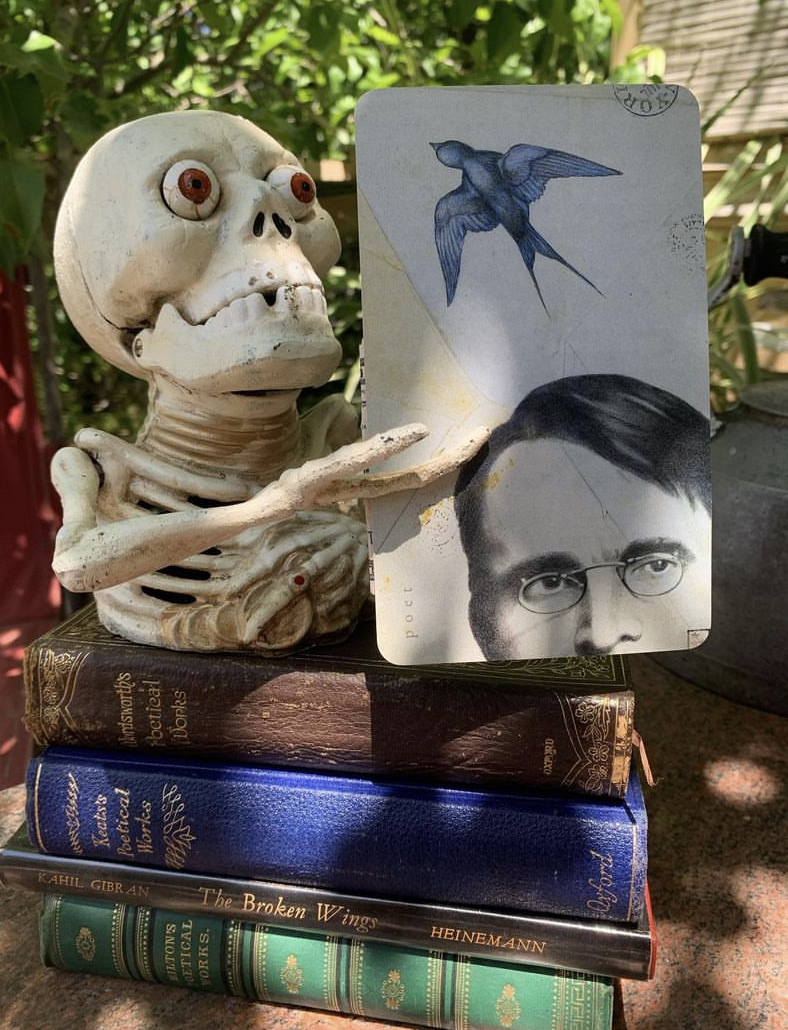
As I sit, silently, perched on a pile of poetry books, vague memories of my days as a poet drift back to me.
I was a struggling poet during what is now known as the Romantic era. I was a part of an artistic, literary, musical and intellectual movement that originated in Europe towards the end of the 18th century and worked alongside luminaries such as Blake, Shelley and Wordsworth.
Romanticism involved a reaction against prevailing Enlightenment ideas of the 18th century, and lasted approximately from 1800 to 1850. Romantic poets like me rebelled against the style of poetry from the eighteenth century which were based around epics, odes, satires, elegies, epistles and songs. We sought freedom from rules and were passionately interested in nature and the internal world of feeling. We trawled our inner feelings and celebrated creativity rather than logic. We genuinely believed that imagination was superior to reason.
Here in my current state I look around and mourn a world which has begun to feel so ordinary, so like a toxic wasteland. Where are the Keats, the Shelley’s the Byron’s, the Mary Robinson’s? At least my host, a former literature teacher, has a reasonable collection of poetry that I can pour over.
“Here bounds the gaudy, gilded chair,
Bedecked with fringe and tassels gay;
The melancholy mourner there
Pursues her sad and painful way”
Sigh! Mary Robinson’s words from Birth-day help me remember and filter through my thoughts.
Candle Extinguished

Like so many of my peers I did the Grand European Tour, made a pilgrimage to Delphi to drink from the waters of Castalia and cavorted around the various Salons where other poets liked to gather. Unfortunately I eventually spent the last of my limited resources and my skin flint father was unwilling to provide more funds for what he deemed to be “a frivolous lifestyle”.
Regrettably, like Thomas Chatterton before me, I struggled to make a living in Vienna and ended up living in an Inn attic room staving off hunger.
After my death by poison Wallis painted a picture of the poet as a martyr. The Ten of Swords, seen here, features a poetry book lying near the blood of a slain poet. It certainly depicts my fate and has added fuel to the stereotype of the suffering artist.
Bohemian-Austrian poet Rainer Maria Rilke wrote a series of letters to Franz Xaver Kappus, a 19-year-old officer cadet at the Theresian Military Academy encouraging his poetry. I would advise any young poet to keep an undemanding daytime job to support their creative pursuits. T.S Eliot worked in the foreign transactions department at Lloyd’s bank from 1917 until 1925 (from the age of 29 until he was 37).
I certainly don’t recommend poisoning oneself. It’s a nasty end and who knows what the next life has in store. When I found myself in the trenches in France clinging to life I remembered all this and had cause for pause. But that’s another story.
 Wild Mother Calling
